
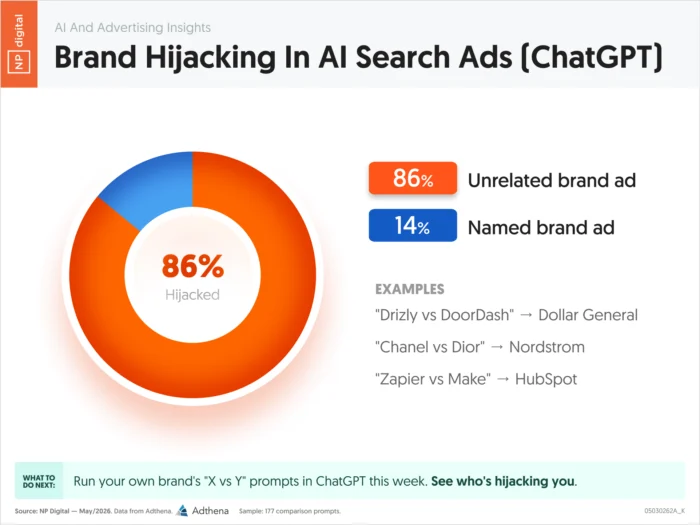
Key insights
- AI-generated answers have compressed brand discovery into a single moment. A summary can now serve as a customer’s entire first impression.
- AI systems draw on a variety of sources including forums, review sites and outdated content, not just your own properties.
- The most repeated claim tends to appear in AI output, not necessarily the most accurate one.
- Inconsistent messages are amplified by AI, not smoothed out.
- Content governance, proactive publishing and continuous monitoring are the new foundations of brand reputation management.
Brand management is facing a new problem. Everything you have built, your positioning, your messaging, your reputation, can now be summarized by an AI system before a customer ever visits your website, reads your content or speaks to your team. This summary may be accurate. It may not be the case. The person reading it probably has no way of telling the difference.
This is not a hypothetical risk. This happens continuously, across all major AI platforms and for brands of all sizes. The question is not whether AI will affect people’s perception of your brand. It’s about whether you do something to influence what the AI says.
The problem of first impressions
In the past, people formed an impression of brands gradually. They came across news coverage, read reviews, visited a website, and talked to someone. Perception builds over multiple interactions, giving brands time to shape it.
This process is compressed. An AI-generated response can now intervene for all of these touchpoints. A potential customer asks ChatGPT or Perplexity about your company, gets a two-paragraph summary, and is left with a complete impression, whether accurate or not, before ever interacting with something you control.
What makes this really difficult is the way AI creates these summaries. Your own content will not be prioritized. It uses everything it can find: your website, press reports, review platforms, social media, forum discussions, complaint forums. It weights these sources based on factors that are not always intuitive. A large amount of low-quality negative content can outweigh a smaller amount of accurate positive content. Old information that has not been addressed or replaced is displayed alongside current content without a timestamp visible to the user.
Your brand’s AI reputation is shaped by your entire content footprint, not just the parts you’ve carefully invested in.
The risk goes beyond false information
Most brands are not threatened with pure counterfeiting. The more common risk is partial truths: accurate statements taken out of context, outdated information that was once correct, nuanced positions that have been simplified to the point where they no longer reflect your actual position.
Partial truths are more insidious than false information because they are harder to dispute and easier to spread. Once an AI system assembles a narrative from the sources it finds, that narrative is reinforced every time someone asks a related question. It becomes what people know about you, and correcting it requires more than just posting accurate content. It requires sharing the sources from which the AI draws.
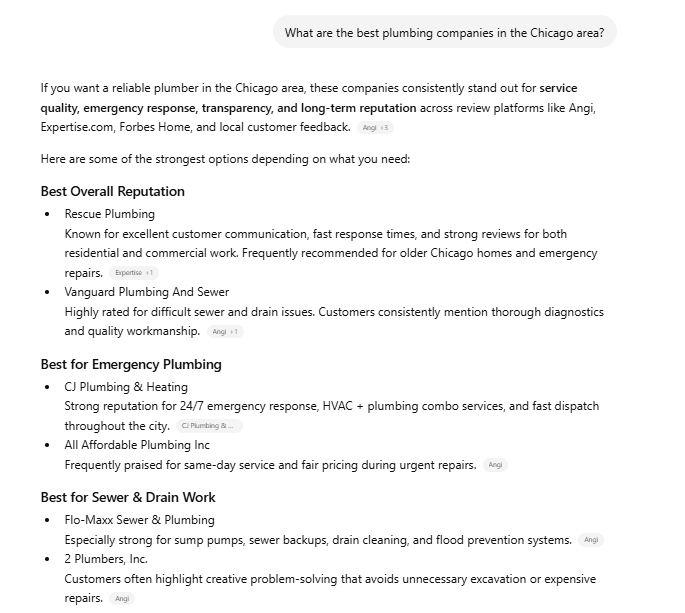
There is also a reinforcing effect to be aware of. AI-generated summaries are shared across platforms. Screenshots will be published. These shares become new inputs that reinforce the same narrative in future AI outputs. A problematic summary is not included.
The practical consequence is obvious: the most accurate claim is not automatically at the top of the AI output. The most frequently repeated statement is true.
Content governance is now brand protection
The practical answer to this challenge begins with content governance, and governance requires a different framework than is typically found in marketing organizations.
Most brands view governance as an internal process concern: who approves content, how are brand guidelines followed, what templates do teams use? These things are important. However, in an AI-powered environment, governance is the mechanism that determines whether AI systems can accurately capture who you are. It’s infrastructure, not administration.
As one brand governance expert put it, “This ensures that your brand’s core signals are clear enough to survive compression by an AI component.” When brand signals are inconsistent or vague, AI reinforces that inconsistency rather than fixing it.
Consistency of messaging across every touchpoint. When different teams, regions, or channels post different descriptions of your product, mission, or positioning, the AI finds them all and combines them into something that may not accurately reflect any of them. A unified source of truth from which all external content draws is the foundation.
Content that explains rather than making claims. AI systems have no way of evaluating vague marketing terms. Terms like “industry-leading” or “innovative” have no meaning for an AI that summarizes your brand. What is registered is a specific, understandable explanation of what you do, how you work and why it matters. Replace general statements with clear explanations in your own content.
Your website is treated as AI infrastructure, not just a marketing asset. Most organizations still build their websites primarily as human-facing experiences. For AI systems, your website is often the first place to understand your business. Review your most important pages with one question in mind: Could an AI create an accurate summary of your brand from what we’ve published here? If the answer is no, you need to work on content.
Take an active role in what the AI says about you
Governance takes care of internal consistency. The external image requires a more active approach.
First, check what AI systems are currently saying about your brand. Prompt ChatGPT, Google AI Overview and Perplexity with the questions a potential customer, investor or journalist would ask. Record these expenses. Then trace the narrative back to its sources. Are these sources correct? Current? Are negative or outdated sources being heavily weighted because you haven’t published sufficiently structured content to counter them?
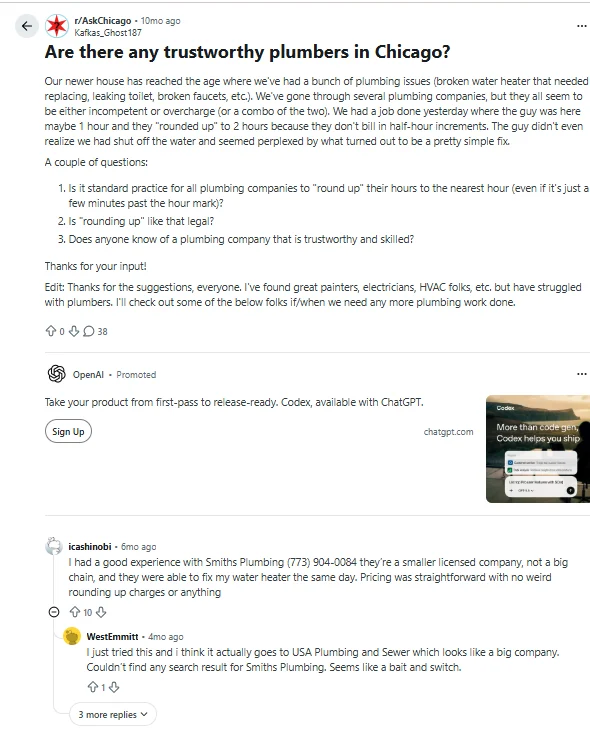
Using our Chicago plumber example from earlier, we see that Angi plays a large role as a source in this ChatGPT answer.

This check will give you a content agenda. Gaps in AI representation can often be filled by publishing clear, well-structured content that provides AI systems with better information from which to draw. When outdated claims emerge, identify the sources driving them and contact those sources directly. Claims made on Reddit or social platforms may be edited on those platforms.
Structured explanations published in FAQs and guidelines give AI systems better, more timely information to draw from.
The credibility of third parties is of great importance. Earned media, analyst coverage, and credible reviews are treated as signals of high trustworthiness by AI systems that evaluate external validation. Proactive brand publishing and digital PR work are not just marketing tactics in this environment; They are inputs that shape what the AI says about you before a narrative becomes solidified.
Speakers and managers also need to think about this. In a traditional media environment, journalists contextualize statements. In an AI-powered environment, these statements are converted directly into summaries. Specificity and context are more important than polished sound bites. Full explanations spread better than condensed talking points.
Monitoring cannot be periodic
One of the most common mistakes brands make with AI reputation management is treating it as a project with a completion date. You check, close the gaps and move on. This approach ignores how dynamic the AI reputation environment actually is.
A new piece of reporting, a viral social media post, a change in messaging from a competitor, or a change in the way your content is indexed can all change what an AI says about your brand. The only way to get ahead of narrative shifts before they become entrenched is to monitor consistently, not quarterly.
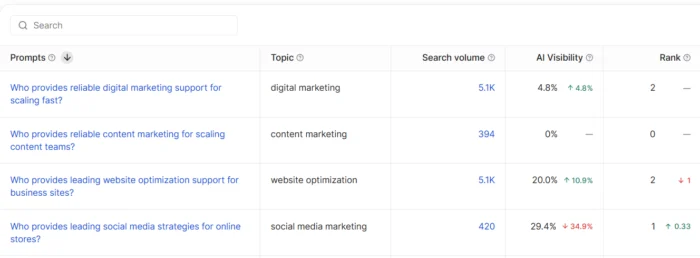
Build an ongoing practice of engaging key AI tools with brand-relevant queries on a regular basis. Track what changes. Create workflows to respond to misinformation on the platforms where it originates before it has a chance to spread. Think of AI reputation management the same way as SEO: something that requires ongoing attention, not a one-time solution.
FAQs
How often should I check what AI says about my brand?
At least monthly, with greater attention during times of major company news, product launches or other events that generate significant external coverage. AI systems update as the web refreshes, so the spend you capture today may not reflect what users see in six weeks.
What content influences AI summaries most effectively?
Clear, specific and well-structured content that directly addresses the questions people are asking about your brand. Frequently asked questions, easy-to-understand product explanations, executive Q&As, and detailed company descriptions all work more effectively than vague marketing copy. Third-party reporting from credible sources also has a high signaling effect.
What should I do if the AI says something wrong about my brand?
Identify the sources underlying the inaccurate representation. Address misinformation directly on the platforms where it originates (forums, review sites, social media). Publish structured, authoritative content that gives AI systems better information to draw from. Building credibility with third parties through earned media helps establish accurate narratives as the dominant signal over time.
{ “@context”: “https://schema.org”, “@type”: “FAQPage”, “mainEntity”: [
{
“@type”: “Question”,
“name”: “How often should I audit what AI says about my brand?”,
“acceptedAnswer”: {
“@type”: “Answer”,
“text”: “
Monthly at minimum, with closer attention during periods of significant company news, product launches, or any event that generates substantial external coverage. AI systems update as the web updates, so the outputs you capture today may not reflect what users see in six weeks.
”
}
}
, {
“@type”: “Question”,
“name”: “What content is most effective at influencing AI summaries?”,
“acceptedAnswer”: {
“@type”: “Answer”,
“text”: “
Clear, specific, well-structured content that directly addresses the questions people ask about your brand. FAQs, plain-language product explainers, executive Q&As, and detailed company descriptions all register more effectively than vague marketing copy. Third-party coverage from credible sources also carries high signal weight.
”
}
}
, {
“@type”: “Question”,
“name”: “What should I do if AI is saying something inaccurate about my brand?”,
“acceptedAnswer”: {
“@type”: “Answer”,
“text”: “
Identify the sources driving the inaccurate narrative. Address misinformation directly on the platforms where it originated (forums, review sites, social media). Publish structured, authoritative content that provides AI systems with better information to draw from. Building third-party credibility through earned media helps establish accurate narratives as the dominant signal over time.
”
}
}
]
}
Diploma
The question brand managers must ask themselves has changed. It’s no longer just a question of, “What message do we want to spread?” It says, “What will AI tell someone about us, and is it accurate?” Answering this question requires consistent messaging, clear content, active monitoring, and a willingness to view AI reputation as an ongoing business function rather than a marketing add-on.
The brands that build this infrastructure now will have a significant advantage as AI-powered discovery continues to grow. The brands that fail to do this will find their reputation increasingly dependent on what the AI finds first.
Follow us on Facebook | Twitter | YouTube
WPAP (697)
