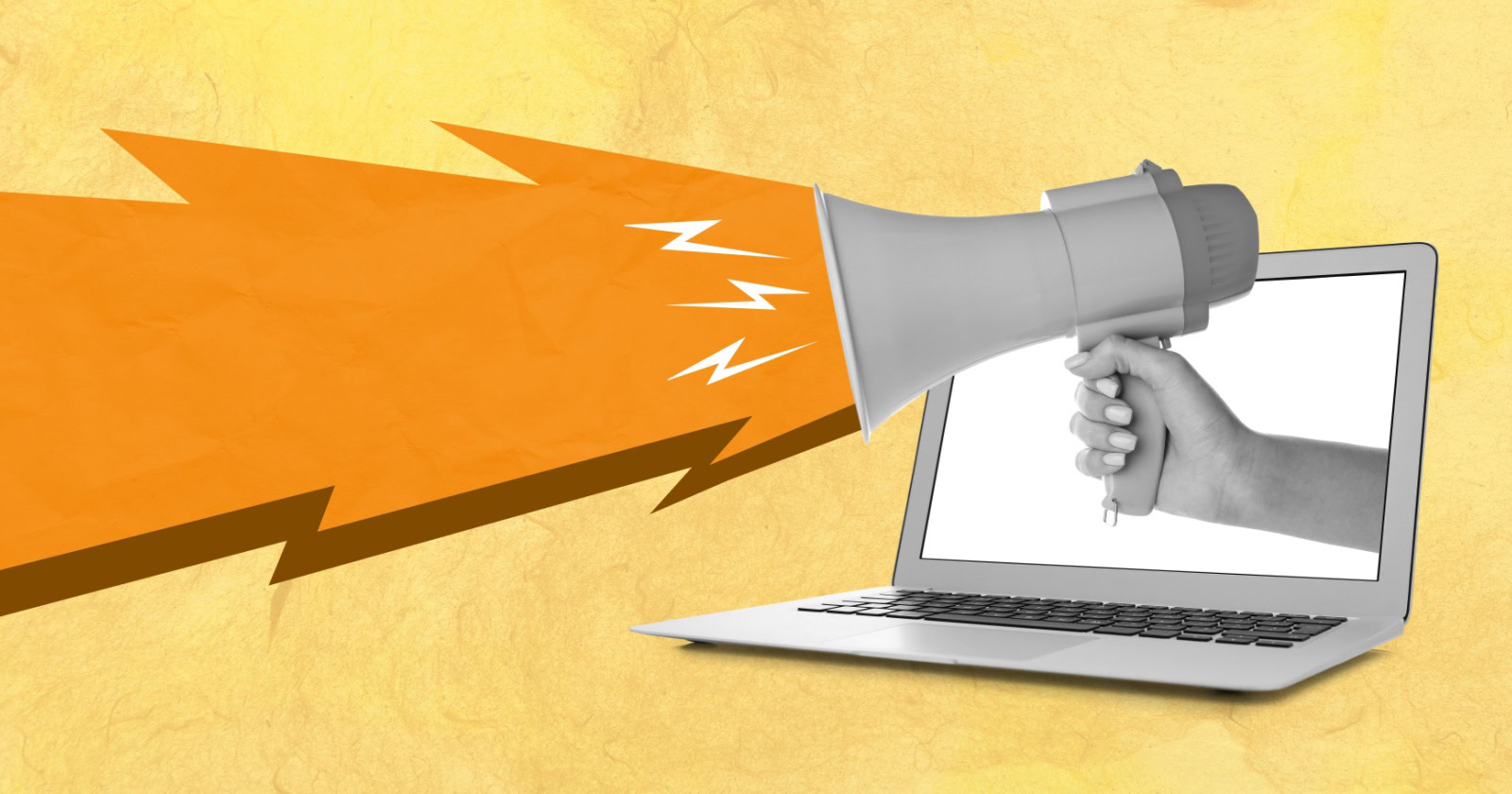
There’s a lesson from the early days of social media that most brands ultimately learned the hard way: social media is not a megaphone.
You can’t just push your press releases into the feed and expect people to care. The channel had rules. It rewarded conversations, not announcements. The companies that recognized this early prospered. The rest screamed into the void for years, wondering why no one got involved.
We watch the same mistake happen again, just one level deeper. This time it’s not about what platform you’re on. It’s about assuming that the message can be found on your website.
Why most websites break when AI agents read them
Most websites still operate on one basic assumption: someone will arrive at your front door, navigate your carefully crafted pages, and consume your message in exactly the order and format you intended.
This assumption is broken.
In 2026, your website will no longer be the only interface to your content. An AI agent could summarize your services page for someone in the middle of a conversation. A voice assistant could read your prices out loud, without any visual hierarchy. A research tool could take three paragraphs from your blog, recontextualize them with those of a competitor, and present them in a comparison that the user never asked you about. Someone may never visit your website and still make a decision based solely on what your website says.
If your message only works when it’s tied into your layout, your fonts, and your carefully choreographed scroll, you don’t have a message. They have a brochure. And brochures don’t travel well.
The change that is taking place is subtle but fundamental: you need to shape the message regardless of the medium.
That doesn’t mean your website no longer matters. This means your website is now one of many surfaces where your message could land. And the message must endure in everyone. It has to make sense when you read it in its entirety, when you summarize it in three sentences, when you take it apart and put it back together with something you didn’t create and that you don’t control.
This changes the way you write. It changes the way you structure information. It changes what you consider to be “the product” of your content work.
Here’s a simple test: If there was a single “lorem ipsum” anywhere during the creation of your website, the message came second. The design came first. This order no longer works.
In practice this means the following:
Your core message must be extractable. When an agent selects a paragraph from your website, does that paragraph carry weight on its own, or does it fall apart without the paragraphs around it?
Your value proposition cannot hide behind design. Bold typography and hero animations don’t run through an API. The words have to do the work.
Structure becomes a form of portability. Clear headings, logical hierarchy, clearly defined requirements. These are no longer just good for traditional SEO. This is how machines analyze your intention and relay it precisely.
You need to think about your content the way a news outlet thinks about a wire story. The story has to work, no matter which publication picks it up, no matter how they cut it, no matter what headline they slap on it. The facts and narrative must be embedded in the text itself, not in the presentation layer.
Brand control as AI is recontextualized at scale
There is a natural resistance to this idea. “If I don’t control the experience, how do I control the brand?” But that’s the megaphone instinct speaking. The desire to control exactly how each word lands, in just the right font, with just the right white space. That was always a bit of an illusion anyway. People skim. People read on phones in poor lighting. People copy and paste your prices into a Slack thread without context.
The difference now is that recontextualization occurs on a large scale, automatically, and often before a human even sees it.
So the question is not how to prevent this. Here’s how to make sure your message is strong enough to survive.
Websites as canonical sources, not just destinations
Your website still matters. But the job description has changed.
Your website is no longer just a destination. It is a source. It is the canonical, structured and well-maintained point of origin from which your message is picked up, interpreted, summarized and distributed elsewhere. The better the source material, the better it spreads.
Think of it this way: your website used to be the store. Now it is also the warehouse. And the warehouse must be so well organized that anyone (human or machine) can find what they need, understand what it means, and carry it somewhere else without losing track.
The companies that get this right will be the ones whose message comes across clearly, no matter where the conversation takes place. Those who don’t will continue to design beautiful megaphones and keep wondering why the room isn’t listening.
Additional resources:
This post was originally published on No Hacks.
Featured Image: Pixel Shot/Shutterstock
Follow us on Facebook | Twitter | YouTube
WPAP (907)
