
As SEOs, we are used to adapting to changing algorithms, so LLM optimization should be a simple extension of this process.
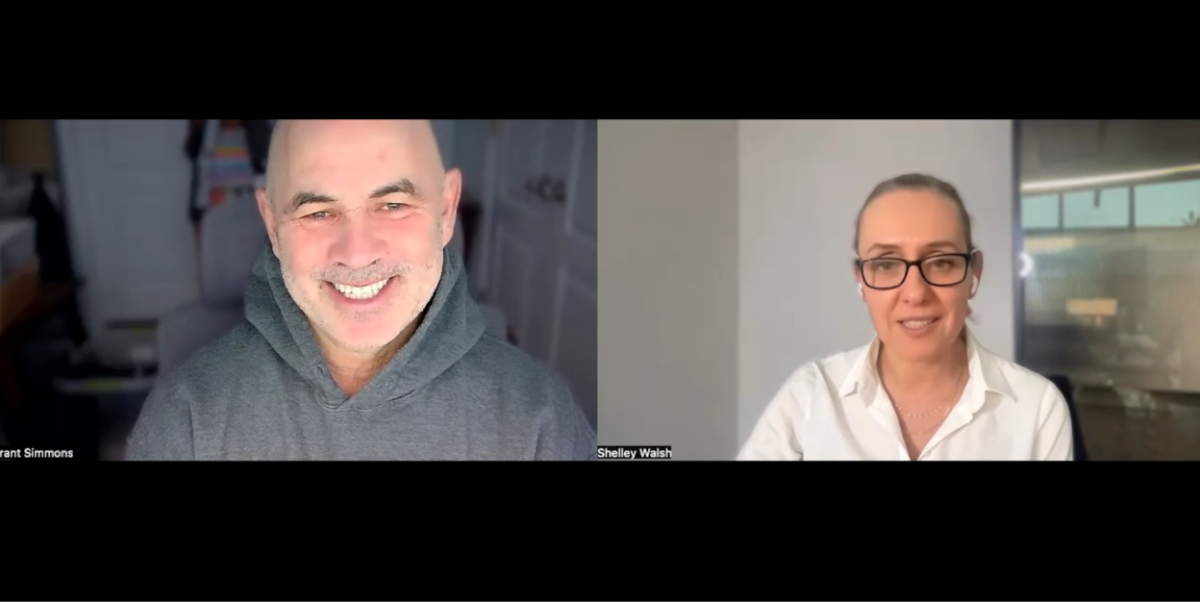
To discuss the industry debates surrounding the differences between SEO and GEO and whether they are the same or different, I spoke to SEO veteran Grant Simmons.
Grant has more than 30 years of experience helping brands grow and has focused on meaning, intent and thematic authority for decades, long before LLMs came into the conversation.
I spoke with Grant about signal targeting, how Google’s latest continuation patents reveal the mechanics of LLM citations, and what SEOs get wrong when it comes to topic focus.
“We talk about writing for the machines, but in reality we are writing for human needs because everything is driven by the prompt or request.” – Grant Simmons
I think you can watch the full interview with Grant below or continue reading the article summary.
Great SEO is good GEO
At Google Search Live in December 2025, John Mueller said, “Good SEO is good GEO.”
I asked Grant what he thinks the differences are between optimizing for search engines and optimizing for machines and if he thinks there is any overlap.
Grant’s approach echoes John Mueller’s statement, but “Not everyone has done great SEO,” he explained. “Great SEO has always been about building topic authority.”
He continued: “Essentially, machines (whether Google or an LLM) need to understand the underlying meaning of the content so that they can present the best answer.”
You must understand the request or request and then send the best response. So in that respect it’s very similar.”
Grant sees differences in the way the systems evaluate content. Google has ranked pages in the past, and even with passage ranking, it still looks at the page and website as a whole. LLMs work differently.
“LLMs look more at the passage side, you know, something that’s easy to extract, something that has a value that’s semantically related to the query or the prompt. And there’s this fundamental difference.”
Grant also emphasized that great SEO has always been holistic, touching on social media, PR, content and brand messaging. Brand awareness, brand visibility and brand consistency across all channels are an essential factor in LLM representation. And that’s exactly the type of work that the best SEOs do.
“We are marketers. We should make sure that not only in terms of what we do in SEO and GEO for our customers, we are connecting a need and an intent with the product or service that meets that intent, but that we are doing the same thing in our own marketing. We need to understand what our customers are looking for.”
“[GEO] is the same [as SEO] if you do it well. It wouldn’t be the same if it weren’t you. And of course there are nuances.”
I think SEOs who have been in the industry the longest experience fewer disruptions because they’ve seen it all before. They learned to be adaptable in the early years when there were so many changes as we went from multiple search engines to just one. However, if you’re new to the industry, you don’t have the same background reference points.
Why consensus is important to bring to the surface by LLMs
I then asked Grant about Google’s latest continuation patents, which describe two different systems working together.
The first is what Grant describes as a response trust machine. This system evaluates whether a passage can be verified and whether the information finds consensus across the web.
“If they can return a passage and confirm that it is true, and when we say true it is true in the sense that more than one person says it, that doesn’t mean it is true, but that the consensus is there,” Grant explained. “In general, consensus prevails.”
The second system is what Grant calls a linkifying engine. Once a passage has been confirmed by consensus, this engine determines whether a particular sentence or sub-element within that passage, what Grant calls a “chunklet,” can be matched and linked to a source.
“Consensus decides whether it even shows up. The Linkify engine actually decides whether it’s linkable and whether it actually gets cited,” Grant said.
Getting mentioned by an LLM is one thing. To receive an actual link back to your content, the specific passage must be both verifiable by consensus and clearly attributable to your source.
Gain golden knowledge content
So what kind of content deserves this kind of AI visibility? Grant described it as “golden knowledge,” content that is unique in some meaningful way.
“Generally data-driven, your own data, your own opinion backed by evidence and proof. Take a different look at things,” Grant said. “But to have a different point of view, there still needs to be some sort of consensus. If other people agree with you, that’s really important. Your content needs uniqueness and the data-driven aspect, but it still needs to be consistent with the overall consensus on the web.”
Grant also made it clear that while we often talk about writing for machines, the focus should still be human-centered: “We talk about writing for machines, but we’re actually writing for human needs because everything is driven by the prompt or request.”
This balance between uniqueness and consensus is perhaps the most actionable insight. Content that simply repeats what everyone else is saying doesn’t stand out. But content that takes a stand without confirmation elsewhere will not cross the trust threshold to reach the public. The sweet spot is original, data-driven insights that others can and do validate.
The Biggest Mistakes Topic-Focus SEOs Make
When I asked Grant about the most common mistakes he sees when it comes to thematic diversification on sites, his answer was clear: He tried to be everything to everyone.
“When you think about intent, you suddenly understand that pages have a reason to exist,” Grant said. “I call it the path to satisfaction. If you understand who the audience is and what they need to find, you have to find a path to that satisfaction.”
Grant pointed out that most SEOs take over existing websites instead of building them from scratch. The temptation is to focus on superficial optimizations like title tags, meta descriptions, and headers without examining whether a page is actually aligned with a specific intent or whether it exhibits what he calls “drift.”
“What they don’t do is fundamentally review the page and understand whether that page is targeted to a particular intent or whether it has this deviation,” Grant explained. “Removing those outliers, topics that you cover even though you don’t really want to, is essentially spreading the importance of the page. These are the things that I think SEOs miss.”
This is directly related to the citability of LLM. If a page lacks a clear thematic focus, it becomes more difficult for AI systems to extract a self-contained passage that answers a specific question. Sharpening this focus isn’t just good SEO; It is the basis for being visible in AI-generated answers.
Grant’s strategy recommendation for 2026
Finally, I asked Grant what he currently recommends to his clients.
“Let’s double down on what works,” Grant said. “LLM traffic is so low today that optimizing for LLMs is important for the future, but not for today’s metrics. Let’s improve our SEO. Let’s get to that great level of SEO. And as we do that, we’re incorporating the elements that will help you appear on GEO, that will help you appear on these other surfaces.”
His focus is on great content, timely authority, uniqueness, data-driven approaches, quotes and digital PR. In Grant’s words: “Getting content so good that LLMs can’t ignore you, Google can’t ignore you, and publications can’t ignore you.”
It’s the Steve Martin philosophy applied to SEO: “Be so good they can’t ignore you” and, coincidence or not, the rule I’ve used in SEO for the last 15 years.
Watch the full interview with Grant Simmons here:
Thank you to Grant Simmons for giving me his insights and being my guest with me.
Additional resources:
Featured Image: Shelley Walsh/Search Engine Journal
Follow us on Facebook | Twitter | YouTube
WPAP (907)
