
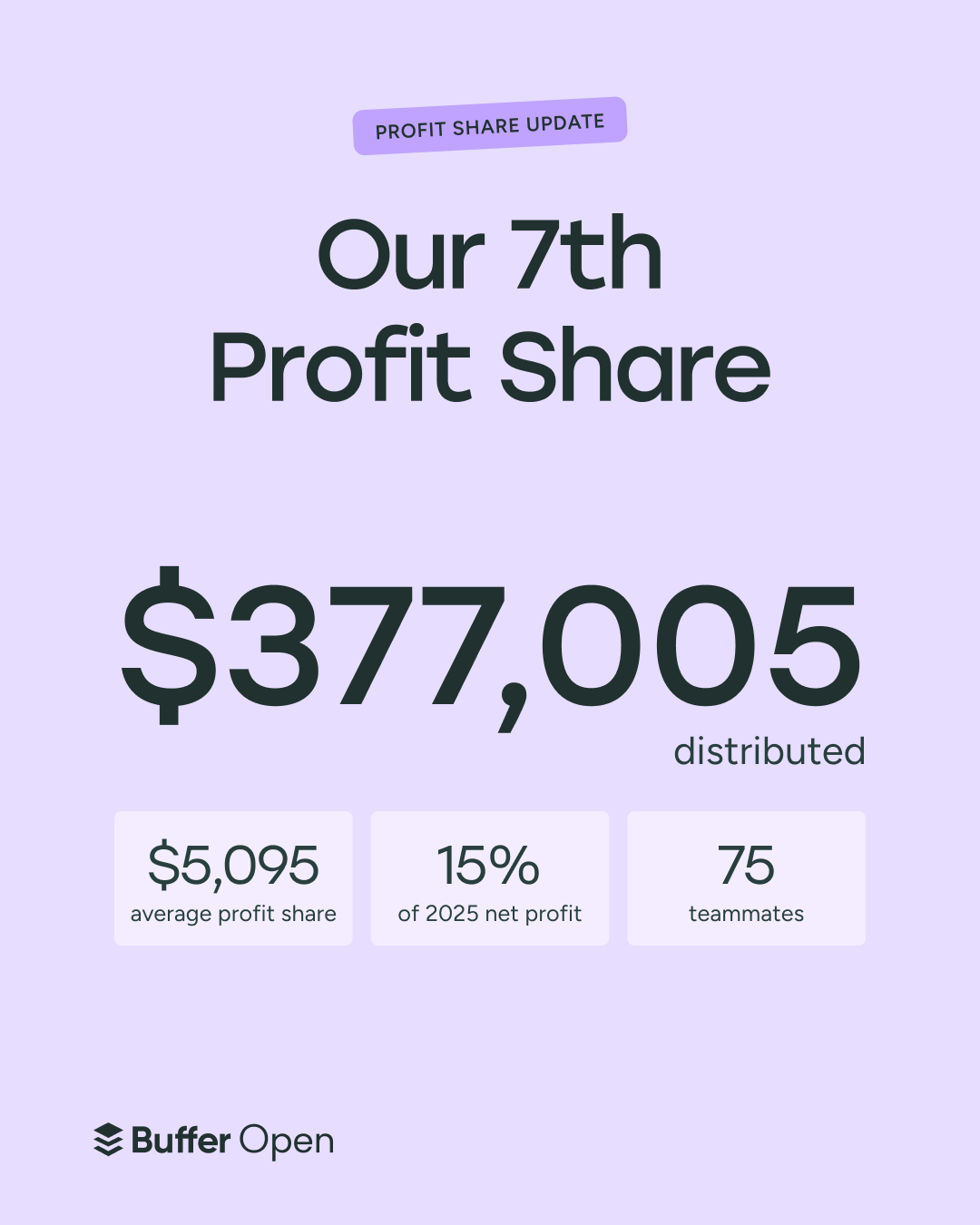
A few weeks ago we completed our seventh profit share with Buffer, distributing $377,005 to 75 teammates.
That’s more than a dollar amount. It reflects a real shift in our growth and direction.
Just a few years ago we were completely unable to do this. We experienced two years of net losses, made tough decisions, and focused intensely on rebuilding a healthy, sustainable business. There were moments when profitability and profit sharing seemed distant.
Therefore, returning to this practice in 2025 makes particular sense, with an average share of $5,095 per teammate. It reflects the resilience of our team, the care people have put into their work and the progress we have made together.
In this post, I’ll share more about this milestone, why profit sharing is so important at Buffer, and detail how our formula works.
Why we share profits
At Buffer, profitability is not just a financial milestone. This gives us the freedom to operate as an independent, long-term oriented company.
We are now in our 15th year of existence. If we remain profitable, we can continue to invest in our product, our customers, our team and our mission without compromising our values.
Our founder and CEO Joel Gascoigne often talks about how as Buffer grows and succeeds, we should grow and succeed together. Profit sharing is one of the most tangible ways we put this belief into practice.
When the company does well, our teammates benefit directly. This creates a strong connection between our collective effort and real, meaningful results in people’s lives. It also reinforces something we care deeply about: building a company where success is shared.
For me personally, profit sharing is a reminder that sustainable growth and people-centered values do not have to be in conflict. If they do it carefully, they strengthen each other.
Our profit-sharing story
We started sharing profits in 2017. Here’s a look at our profit sharing since then:
2017: Net Income: $1,418,604 | Profit sharing pool: $300,000
2018: Net Income: $3,418,352 | Profit sharing pool: $394,997
2019: Net Income: $2,392,409 | Profit sharing pool: $368,051
2020: Net Income: $1,940,828 | Profit sharing pool: $243,047
2021: Net Income: $216,557 | Profit sharing pool: $89,828
2022: Net Income: -$1,109,745 | Profit sharing pool: $0
2023: Net Income: -$743,936 | Profit sharing pool: $0
2024: Net Income: $156,244 | Profit sharing pool: $30,369
2025: Net Income: $2,513,367 | Profit sharing pool: $377,005
When you look at this story, you can see a clear story.
We had several years of strong growth, followed by a sharp decline in 2021. In 2022 and 2023, we were not profitable and did not issue profit sharing. In 2024 we began rebuilding, albeit at a modest pace.
2025 means something different. It is our second highest profit share to date and a significant milestone after two challenging years. It reflects the work our team has done to stabilize the company, realign it and create a strong foundation for the future.
This is how our profit sharing formula works
We distribute 15 percent of our annual net profits using a formula designed to balance fairness, transparency and impact.
This is how it works:
40 percent evenly distributed
Each teammate receives the same amount from this share, regardless of role or tenure.
40 percent depending on salary
Each teammate receives a share proportional to their salary as a percentage of the company’s total payroll. This reflects our broader compensation philosophy and our investment in building a thoughtful, transparent pay system.
20 percent based on tenure
This share is based on the length of time each person has worked at Buffer relative to the total months worked by all teammates.
For the year 2025 this resulted:
- Net profit: $2,513,367
- Profit sharing pool (15 percent): $377,005
- Team members: 75
- Average win share: $5,095
Every part of the formula serves a clear purpose.
By distributing it evenly, we ensure that everyone shares in our success. The salary-dependent component reflects responsibility and scope for action. The tenure component recognizes long-term commitment and contribution.
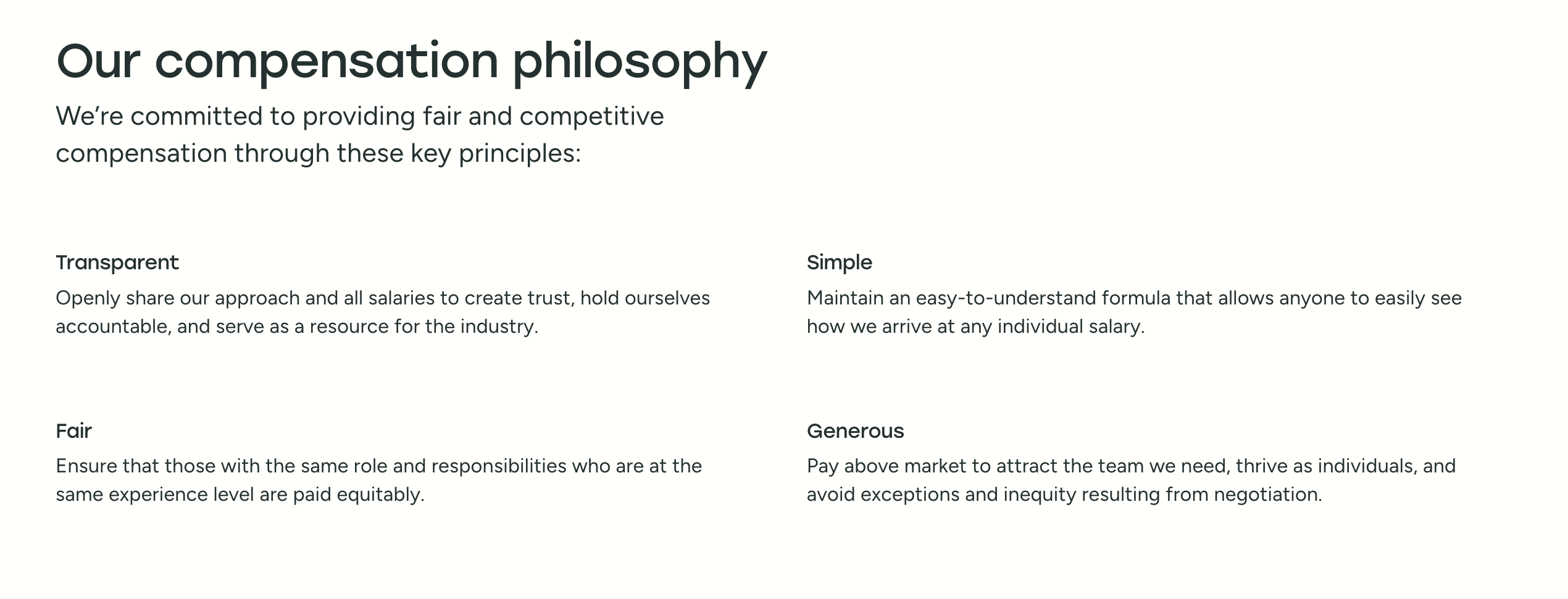
We have learned over time that compensation systems only work if people understand and trust them. That’s why we value simplicity and transparency. Our goal is to create a system that feels fair, consistent and in line with our values.
Looking ahead
Completing our seventh profit share was a meaningful moment for me.
It reflects the commitment of our teammates, the strength of our culture and the belief that building a healthy company is a shared effort. It also reminds me that setbacks do not define us. How we respond to this is important.
Profit sharing is not just a financial result. It is an expression of trust, resilience and shared responsibility for what we are building together.
To you
If this post has raised any questions for you about profit sharing or how we work at Buffer, I’d love to hear them. We are constantly learning and are grateful to be building this company with such a thoughtful community.
Follow us on Facebook | Twitter | YouTube
WPAP (697)
