
I have three children under the age of five – and this involves getting them out of the house on a regular basis essential. I’m constantly searching Google reviews for new and interesting kid-friendly activities in our neighborhood. I’m obviously looking for great reviews, but you know what stands out even more? Reviews with answers from the company.
Not far from us there is a “children’s cafe” that responds to every review. This shows us that they care about their customers – and we go there often. I know I’m not alone in this either.
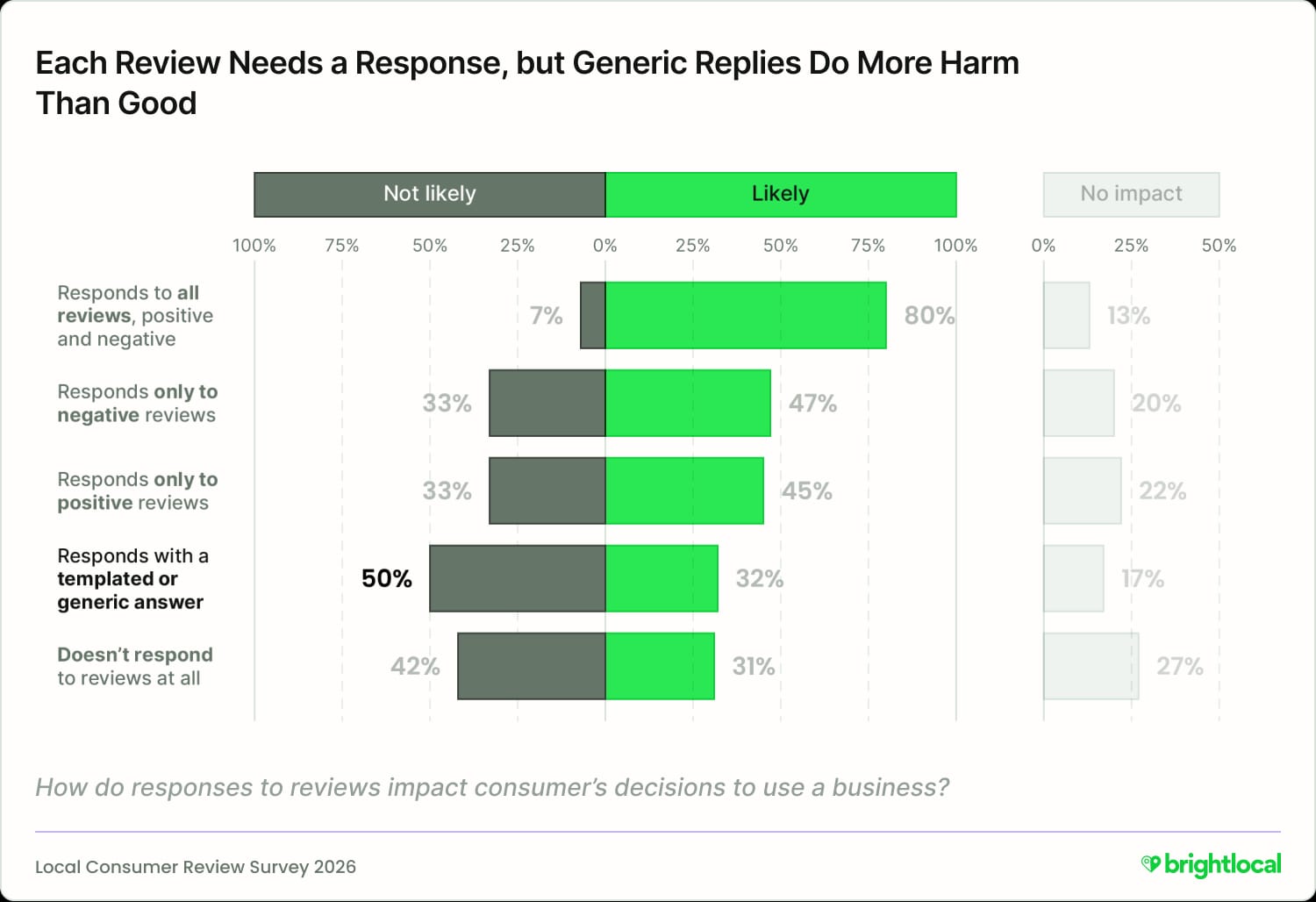
Research from BrightLocal found that 88 percent of consumers would use a company that responded to all of their reviews, both positive and negative.
Here’s the data on why you should respond to Google reviews, how to streamline the process with Buffer, and a real-world example from boutique agency Sapphire Social, which makes responding to reviews a priority for its 30+ clients.
5 reasons why it’s important to respond to Google reviews
Responding to reviews is undeniably good practice – and common sense – but it can also have a strong impact on the bottom line. The numbers are fascinating:
1. Your customers read reviews
According to BrightLocal’s 2026 Local Consumer Review Survey, 97 percent of consumers read online reviews, with 41 percent saying they “always” read reviews when reviewing a business. That’s a big jump from 29 percent last year.
Most of these reviews are found on Google – approximately 81% of consumers use Google reviews specifically to evaluate local businesses (Sixth City Marketing).
And they don’t just skim the star ratings, they also read what companies say about it, just like I do, as I mentioned above.
2. Responding to reviews directly affects whether people choose you
About 88% are influenced by whether a company responds to its reviews, whether positive or negative. When you engage with your reviews, consumers are almost twice as likely to choose you. And you don’t have to be perfect at it, you just have to do it.
And it’s not just about reacting to the negative ones. Only 47% of consumers said they would use a company that only responded to negative reviews. Responding to only positive reviews performed similarly poorly. Interesting, right? Consumers apparently don’t like it when you pick and choose which reviews they want to accept.
The latest survey from 2026 goes even further: 89% of consumers are now expect Business owners to respond to reviews, and 50 percent say generic, canned responses would make them less likely to choose a business (BrightLocal, 2026).
3. Responding to reviews leads to more sales
All of this may sound like common sense, but there’s also sales data behind it.
A study by Womply analyzed transaction data from more than 200,000 small businesses in the U.S. and found that companies that responded to at least 25 percent of their reviews generated 35 percent more sales than average. Companies that didn’t respond to reviews earned 9 percent less (Womply via Illuminate8).
Consumers also spend more when they see a company engaging with feedback. The same study found that people spend up to 49 percent more with companies that respond to reviews.
And Harvard Business Review found that when hotels began responding to reviews on TripAdvisor, they received 12 percent more reviews and their ratings increased by an average of 0.12 stars without ever asking for additional reviews (Harvard Business Review). A separate Harvard study found that a one-star rating improvement can result in a 5 to 9 percent increase in sales.
4. It improves your local search rankings
Google itself recommends responding to reviews. The official Google Business Profile help documentation states that responding shows customers that you value their feedback and shows responsiveness (Google Business Profile Help).
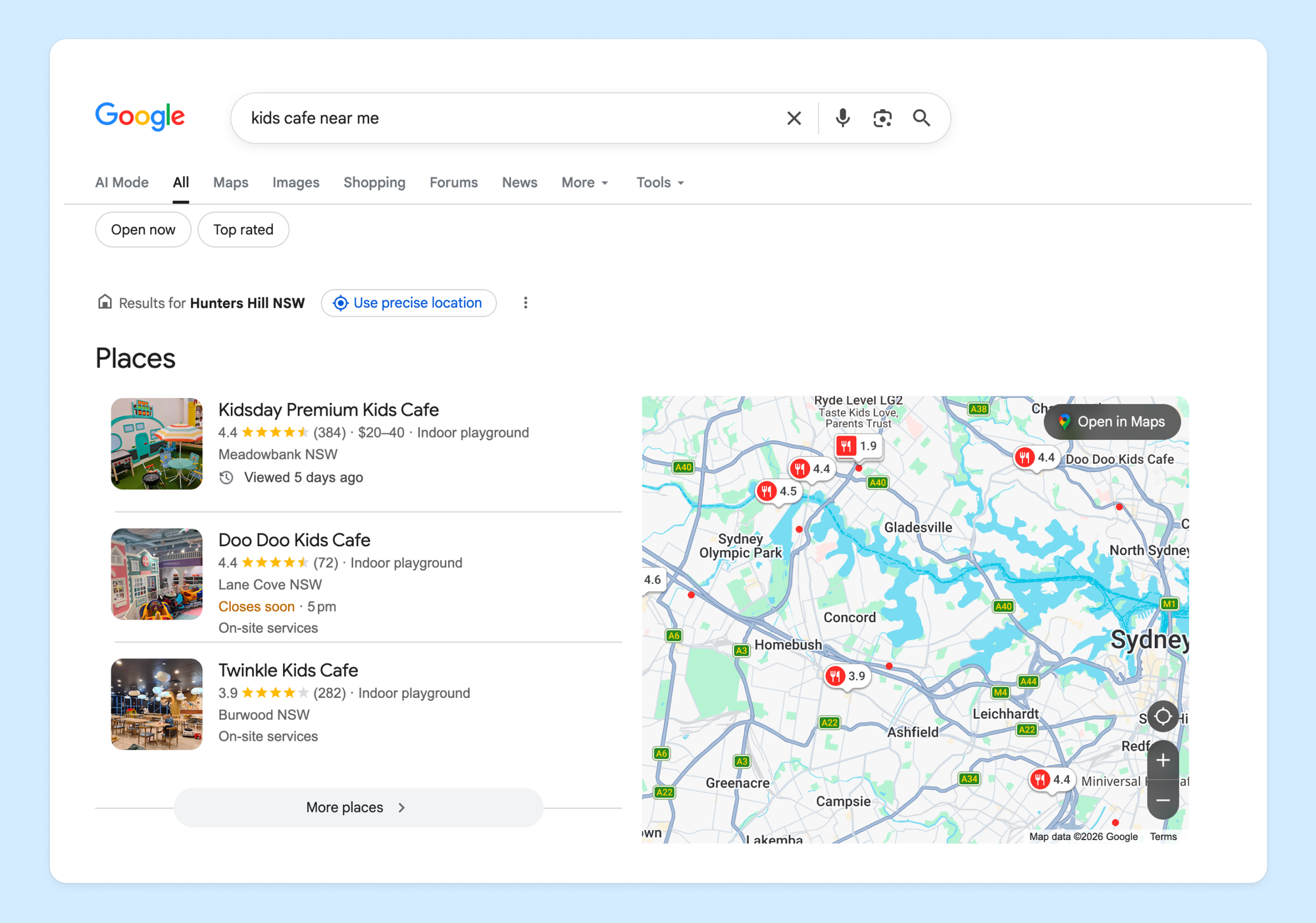
Review signals, which include volume, quality, recency, and whether a business responds, make up a significant portion of local search ranking factors. Research from SOCi found that businesses that rank in Google’s top three local results (the “3-pack”) drive 126 percent more traffic and 93 percent more conversion-oriented actions than businesses that rank lower (SOCi).
Responding to reviews also feeds into Google’s EEAT (Experience, Expertise, Authority, Trustworthiness) framework, which helps determine how prominently your business appears in local results. Each answer contains fresh, keyword-rich content on your profile, which is a signal that Google is rewarding.
5. Negative reviews are actually an opportunity
This is the part that surprises most business owners: negative reviews, handled well, can actually help you.
Research from Reputation.com found that when a company responds with a personalized message within a day, consumers are 33 percent more likely to improve their rating. And companies see a 16 percent increase in customer advocacy when they publicly address complaints, compared to a 37 percent decrease when complaints go unanswered (reputation).
Joe Burton, CEO of Reputation, described the dynamic well in an interview with CX Dive: A negative review, where the company is visibly doing things right, becomes something like a “super strong review.” It demonstrates responsibility in a way that even five-star reviews cannot (CX Dive).
There’s also the practical consideration that 85% of consumers say seeing whether a company responds to negative reviews is important to their purchasing decision. When you remain silent in the face of criticism, you signal to potential customers that you don’t care or aren’t paying attention.
The data makes a pretty compelling argument. But keeping track of Google reviews is easier said than done – especially if you manage more than one.”
How an agency made Google reviews manageable
All of the above applies to a single business with a Google Business Profile. Now multiply it. I hear this all the time from agencies and companies with multiple locations.
Each location receives its own reviews, has its own customer base, and may require a tailored response based on local context. A copy-paste answer that works for one customer may sound completely wrong to another.
BrightLocal’s guide to multi-location review management highlights the core issue: maintaining brand consistency while keeping responses local and authentic (BrightLocal). And there is a lot at stake. BrightLocal found that 91 percent of consumers say local store reviews influence their overall perception of a multi-location brand.
When Ally Browman, founder of Sapphire Social, described her workflow to Buffer, she talked about logging into individual client accounts, switching between platforms, and making sure nothing falls through the cracks.
Sapphire Social manages around 30 channels across multiple customers, and when I asked her which Buffer feature has changed her workflow the most, she didn’t hesitate: community management.
Special, the ability to respond to Google reviews without logging in to each customer account separately.
“I can’t tell you how great the community management by Buffer has been,” she told me. “We don’t have to pick from the inbox or comments, it’s just all in one place. It’s that easy.”
Previously, her team had two options: logging in with the customer’s credentials (a security issue) or navigating native platforms (a patience issue). Now they manage everything in one dashboard. For an agency juggling multiple Google business profiles, this is the difference between staying on top of reviews and unnoticed piling up unanswered reviews.
Introducing Google Review Replies to Buffer
This is exactly why we added support for replying directly to Google reviews in Buffer. If you already manage your Google business profiles in Buffer, you can now see and respond to incoming reviews in the same place you manage the rest of your social presence.
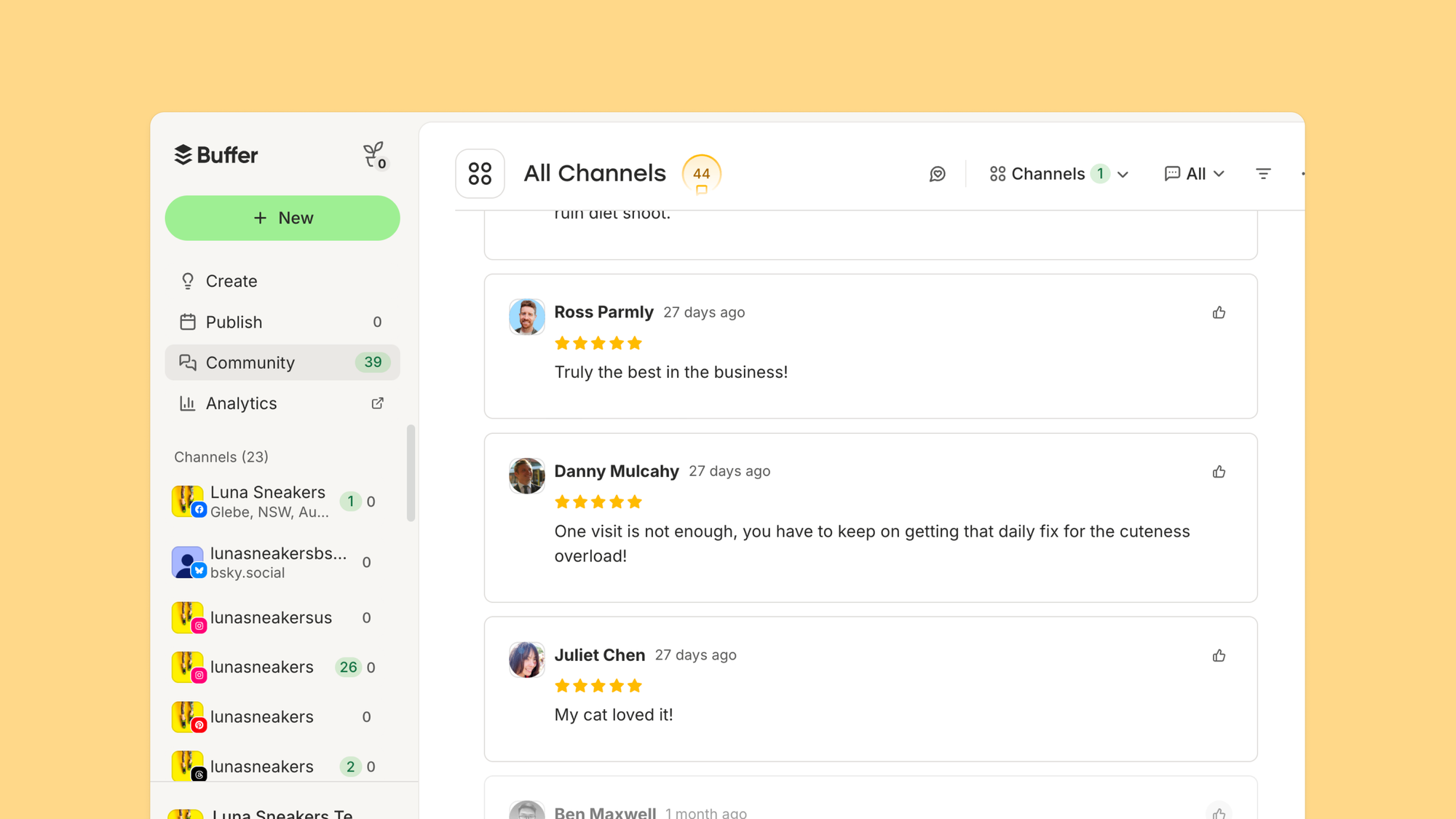
For agencies like Sapphire Social, this means they no longer have to log into individual customer accounts to check for new reviews. For franchises and chains, this means finally having a central overview of reviews at each location. And for any business with a Google Business Profile, this means one less reason to leave reviews unanswered.
As Ally told me, “If you want a tool that handles scheduling, quality control, community management, and team management without the usual hassles, Buffer is it.”
Here’s how to develop a habit of responding to reviews that actually works
You don’t have to make review management a full-time job. A few principles are enough.
Respond to everything. The data is clear. Consumers prefer companies that respond to all reviews, not just negative ones, not just positive ones. Selective responding looks calculated.
Be on time. BrightLocal found that 19 percent of consumers expect a same-day response and 81 percent expect a response within a week. The quicker you react, the more it signals that you are actively engaged.
Personalize your answers. Half of consumers say generic, canned answers turn them off. Mention details from the review. Use the reviewer’s name. Keep it conversational and not corporate.
Don’t get defensive when faced with negative reviews. Acknowledge the experience, apologize if necessary, and offer to take the conversation offline. This doesn’t just apply to the reviewer. It’s for any future customer who reads the thread.
Use tools that centralize work. This is particularly important for companies and agencies with multiple locations. Having a place where reviews appear across all your Google business profiles, where you can read, respond to, and follow them, turns an overwhelming task into a manageable daily habit. As Ally described what’s changed for her team: “We don’t have to pick from the inbox or comments either, it’s just all in one place.”
Don’t leave reviews while reading
Google reviews are some of the most visible content associated with your business. Each one of these is a conversation waiting to happen, and when you have these conversations, you gain more trust, more clicks, and more sales.
(And helping parents like me find a good way to keep the kids entertained!)
More resources for companies
Follow us on Facebook | Twitter | YouTube
WPAP (697)
