I’ve wanted to be a social media creator for years. I finally started six months ago – and almost quit before I even posted a single time. I had lots of ideas – the problem was that every piece of advice I found was written for a brain that works very differently than mine.
I was diagnosed with ADHD in 2019 and Stage 1 Autism in 2020 – and not a single article I read addressed what it takes to stay consistent when your brain is fighting you with it. So I stopped following everyone else’s advice and instead built a system that works for my brain.
My brain inherently doesn’t recognize the steps between “starting a social media account” and “becoming a successful YouTuber.” I see the end goal, but not the path. Standard advice like “be consistent” and “show up every day” assumes that you can translate these phrases into daily action. But I couldn’t. I had to break each step down into smaller steps.
Here is the system I created and use every day to stay consistent. It’s designed for my neurodivergent brain, but if you’ve ever felt paralyzed by an empty content calendar, it’ll probably work for your brain too.
Lower your launch bar
Most advice for beginners suggests “staying consistent” – so I took that literally and decided that the only way to do it right was to post on all platforms every single day.
As you can imagine, that didn’t last long and I was burnt out before I could really get started.
So I made two decisions: I chose a platform – TikTok – and committed to one video post per week. That was it. I didn’t add a second platform until the first one felt easy, and I didn’t increase my posting frequency until the current one felt boring.
Once I had a good system in place, I switched to LinkedIn and started posting once a week, twice a week, and up to seven days a week.
The other thing that gave me consistency was letting go of “perfect.” I’m a raging perfectionist with ADHD, which is a brutal combination. I didn’t just want my content to be good – I had to make it perfect before anyone could see it. And if I couldn’t get it there, I scrapped it and started over or just didn’t post at all. Lowering the bar on both platforms and achieving perfection has helped me with consistency more than anything else I’ve tried.
My main advice here is to not compare your beginning to someone else’s middle. Don’t add a second platform until the first one feels easy. This way you don’t venture out too much before you find the necessary footing.
Having ADHD means your brain is constantly running, even when you desperately want it to stop. For me it feels like I’m standing at a railway crossing while a train passes through. Each car is a different thought, a different idea, a different thing I should do, and once they’re gone, they’re gone forever
I knew I had to find a way to capture the ideas of the moment, since most of them came at the worst possible time – in the shower, driving, or just before falling asleep.
I started with the Notes app on my iPhone, jotting down quick ideas that I later transferred to a Google Doc on my computer. Then I discovered voice notes. The ability to simply talk through an idea was crucial for a brain as fast as mine. Now I use Otter.ai to capture and transcribe voice notes, so nothing is lost in translation.
Having an idea capture system was only half the battle. The other half actually did something with them. During my content creation time, I go through my ideas and develop them into concrete concepts and sometimes even full scripts, depending on the platform.
Start by “batching” your content
When I first started creating content, I thought I should record and write something every day. The constant context switching put a lot of strain on my brain. When it comes to creating, I need to get “the right balance,” and there are a lot of distractions in my life that make it impossible to do that every day.
I saw Kirstis Content Creation Articlesand I really liked your “batch content creation” tip, so I started incorporating it into my content creation routine. I started devoting one morning a week to content creation, creating five to six pieces of content in one sitting. Now that I have a routine for batching, I added a second morning but only created three to four pieces of content in one session. The rest of the week I plan my posts and interact with my community.
This works for me because it means I only have to show up twice instead of every seven days, and it’s been a lifesaver for my sanity.
Create a simple content calendar with themed days
In addition to ADHD, I have autism, and the two don’t always see eye to eye. My autistic brain wants a plan. My ADHD brain wants to throw out the plan.
The solution I agreed on was a flexible framework rather than a rigid schedule. For content creation, this framework is a simple content calendar in Google Sheets with theme days instead of a full content plan.
My TikTok calendar looks something like this: Carousel days, gaming tips and tricks, cat video day, CapCut memes. The topics repeat each week, meaning I never have to decide what type of content I want to create, just what I’m going to create that day in that format.
Create templates
The new beginning also overwhelmed me early on. Creating videos, memes, and carousels with no starting point made the whole thing seem bigger than it needed to be. Templates have eliminated this paralysis.
I started with a template in CapCut for my gaming videos and one for LinkedIn based on a framework I keep coming back to: Hook, Story, Lesson, CTA. Every LinkedIn post I write starts there. The hook grabs attention, the story makes it personal, the lesson makes it useful, and the CTA orients the reader. I fill in the frame instead of starting from scratch.
Start with a template for your most common content type, then create more as you figure out what you want to create.
Vending machines, vending machines, vending machines!
Having ADHD means I am so forgetful that I sometimes wonder how I’m feeling throughout the day. If you’ve ever walked into a room and immediately forgotten why, imagine that repeating itself throughout the day. When it came to creating content, I would create something I was really proud of and forget to post it for days. Sometimes weeks.
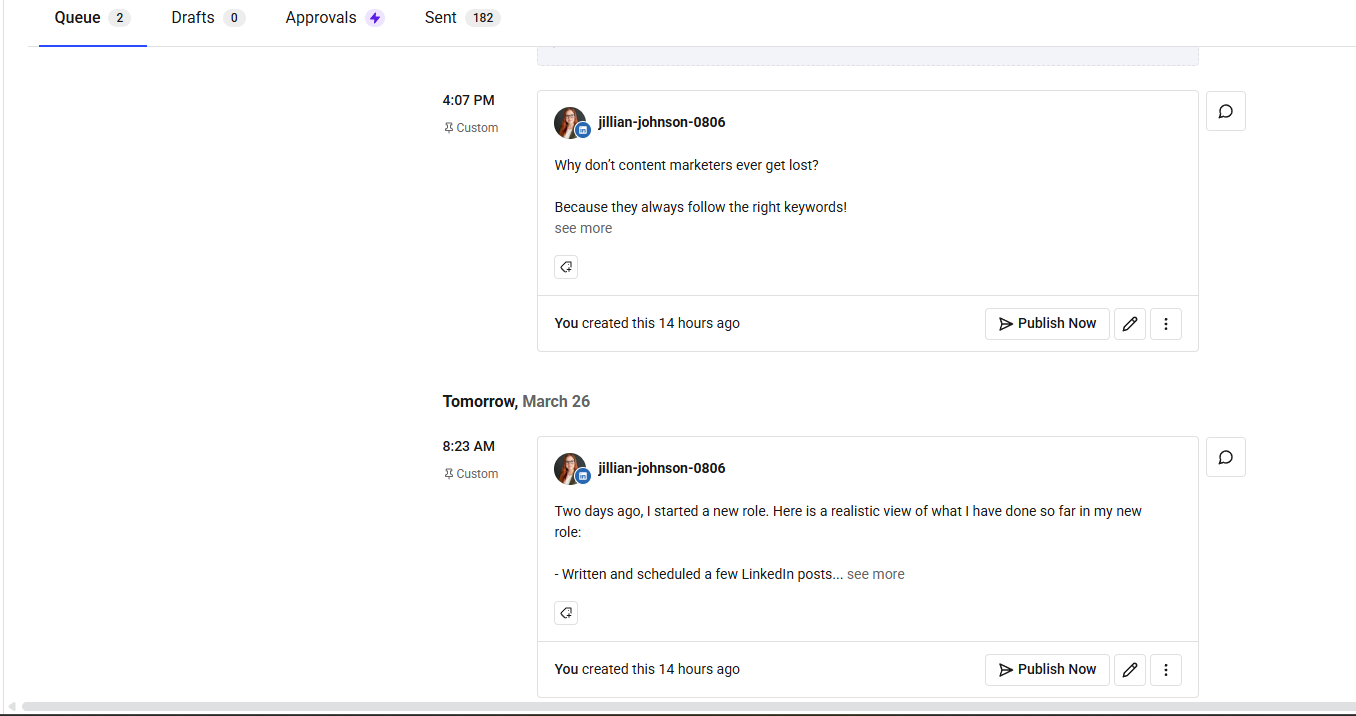
The solution was simple: I stopped relying on my ability to remember. Now I use Buffer to schedule my content on LinkedIn and TikTok. I schedule everything right after my batch build sessions while I’m already in content mode. This way, posting occurs regardless of whether my brain responds or not.
In case you get off track
Part of neurodivergence is that sometimes you miss posts. I missed weeks, abandoned calendars, and ghosted my own accounts. The difference now is that I have a system to go back to, so if something happens, I know exactly how to find my way back.
If I miss a week, I don’t try to make up for it or post twice as much the next week. I’ll just pick up where I left off. One post, one platform, one day. Your system should be forgiving enough to get through your worst brain days.
If this system feels like a lot, start where I did. Choose a platform, post once a week, and don’t worry about the rest until it feels easy. You don’t have to build the whole thing at once, just start.
Follow us on Facebook | Twitter | YouTube
WPAP (697)
