

When the average age of a brand’s customers increases, there is rarely a platform failure. This is usually a signal that younger audiences are discovering, evaluating and purchasing elsewhere and older established brands can’t keep up.
As of 2026, Generation Z will be between 14 and 29 years old. They are the first generation to grow up in an online digital world. Move from smartphones to social video and AI without ever experiencing a world without them. Their expectations of advertising reflect this upbringing. Traditional creative formats, linear funnels, and keyword-centric strategies simply don’t fit how they navigate the internet.
Many PPC users developed their instincts during the 2010-2016 period, when search behavior was more predictable and creative needs were narrower. These instincts don’t clearly translate to a generation that switches between platforms, peer-reviews claims, and expects ads to feel like the content they already consume.
This article looks at why standard Google Ads approaches aren’t enough for the 18-24 demographic, how Generation Z actually discovers products, and what advertisers can adapt to stay relevant.
The “Skip Ad” generation
Generation Z grew up with pre-roll ads, sponsored content, and ad blockers. They learned early on to ignore anything that felt like an interruption. Studies show that their active attention to digital ads decreases after about 1.3 seconds, a number that explains a lot about their behavior around ads.
Authenticity as a basic expectation
For Generation Z, authenticity is not a marketing trend; It is the basic expectation. They gravitate toward brands that feature real people instead of polished models, communicate in clear, natural language rather than corporate phrases, and emphasize imperfect, lo-fi visuals over lavishly produced studio creations.
84% of Generation Z say they trust brands more when they see real customers in ads.
Girlfriend Collective is a good example. The product images feature real people, not traditional models, and the approach reflects what Generation Z expects in their feeds.
Authenticity is no longer a differentiator. They are table stakes.
Discovery Habits: Beyond Google Search
Google Search is still important, but it’s no longer the first port of call for many younger users.
Current data shows:
- 64% of Generation Z use TikTok as their primary search engine.
- 77% identify TikTok as the top platform for products.
Your journey of discovery often begins with a short video, not a search bar. You move through:
- TikTok.
- YouTube Shorts.
- Instagram Reels.
- Reddit.
- Creator’s content.
Only then do they turn to Google to check what they saw. Inquiries like [best running shoes 2026] often start on TikTok and end on Google, not the other way around.
The role of Performance Max and Demand Gen
Google’s push toward Performance Max and Demand Gen reflects this shift. These formats reach users via YouTube, Discover, Gmail, Display and Search, the same surfaces that Generation Z naturally uses.
But PMax can only work as well as the creativity it contains. Legacy assets created for static search campaigns rarely translate well to visual placements. Generation Z will scroll past anything that looks like an ad, especially if it’s overly polished or overloaded with logos.
The shift to intent-based matching
Keyword matching is evolving. During a PPC chat session in January 2026, Google Ads contact Ginny Marvin noted that displaying in AI Overviews and “AI Mode” inventory requires broad match or keywordless targeting.
This aligns with the way Generation Z searches. Their queries are conversational, fragmented, and context-driven, reflecting Google’s increasing emphasis on intent, context, and meaning rather than strict keyword matching.
Advertisers who avoid broad match keywords risk losing visibility on the platforms where younger users spend their time.
The non-linear buyer journey
Gen Z doesn’t move through a funnel. Your path is more like a loop:
- Short video recognition.
- Google search review.
- Social proof on Reddit or Instagram.
- Long YouTube reviews.
- More short-form content.
- Conversion.
Social proof carries significant weight. 77% say UGC helps them make decisions, and unboxing-style clips can increase conversion rates by up to 161%.
The offer does not change, but the format of the proof does.
Privacy and the exchange of values
Generation Z pays attention to data protection, but is not unwilling to share data. They simply expect a clear exchange of values. When these exchanges are obvious and transparent, they are more open to participating. Incentives that work include early access, exclusive drops, loyalty rewards and insider content.
Transparency is important. They want to know what they are giving and what they are getting.
Tactical adjustments to future-proof your Google Ads account
The following adjustments can help advertisers adapt to Gen Z behavior.
1. Rewrite RSAs for tone and context
Many RSAs still rely on keyword-filled templates:
- “Blue running shoes”
- “Best Blue Running Shoes”
RSAs can generate over 43,680 combinations. Use this flexibility to test tone, not just keywords. Use this space to experiment with colloquialism, modern language, benefit-driven messaging, social proof elements, and UGC-inspired copy that better reflect how audiences actually search and interact.
This approach allows Google to put together combinations that better match user intent.
How RSAs deal with text variations
RSAs dynamically assemble headlines and descriptions. The input determines the tone that Google can test.
The following two examples illustrate how different brands approach RSA-like messages and how these decisions impact relevance and emotional resonance.
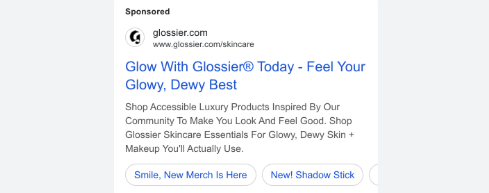
Example 1: Shinier
Headline: Shine with Glossier® today – feel your radiant, dewy look
Description: Shop accessible luxury products inspired by our community to help you look and feel your best. Shop Glossier Skincare Essentials for glowing, dewy skin and makeup you’ll actually use.
Analysis:
- Conversational, emotional, community-oriented.
- This style meets the expectations of Generation Z.
Example 2: COVERGIRL
Headline: Official COVERGIRL® website – available online and in store
Description: Discover our new makeup products, bestsellers and trending tutorials to enhance your look.
Analysis:
- Structured, brand-oriented, availability-oriented.
- Clear and informative, but less emotional.

Important insight for RSAs
Both displays are valid inputs to RSAs, but serve different strategic purposes:
| brand | clay | focus | Gen-Z alignment |
|---|---|---|---|
| Shinier | conversation | Emotionally | High |
| COVERGIRL | Informative | Product + availability | Moderate |
A mix of both styles gives Google more flexibility in AI-driven interfaces like AI Overviews and AI Mode.
2. Update creative assets
Generation Z doesn’t like advertising that interrupts content, which means asset groups should feel at home in the environments in which they appear. This includes lifestyle images, lo-fi videos, real customers, UGC-style clips, and visuals that fit naturally into the feed and don’t stand out as overt advertising.
Organic-looking creatives perform better on PMax and Demand Gen.
3. Use smart bidding
Smart Bidding is designed for non-linear multi-touch journeys. It adapts to device switching, platform hopping, and privacy-focused signals, allowing campaigns to more effectively respond to the way users move between channels and interactions before converting.
This makes it well suited to the surfing behavior of Generation Z.
4. Test Gen Z-specific variants
Use Google Ads Experiments to compare:
- Control: Standard corporate motif
- Variant: Conversational creative in UGC style
This approach provides clear insights into performance without requiring a complete account overhaul.
5. Leverage Data-Driven Attribution (DDA)
The Last Click assignment hides the impact of upper funnel channels. DDA provides a clearer view of how YouTube, Demand Gen, and PMax contribute to conversions, which is essential to understanding Gen Z behavior.
Adaptation to the new standard
Generation Z is not against advertising; They are against interruption. They respond to messages that feel honest, human, relevant, and consistent with their expectations in the places where they spend their time.
Brands that adapt their entire funnel, not just their headlines, will be better positioned to reach this audience in 2026.
Advertisers should review their current Google Ads campaigns and assess whether Generation Z can see themselves in the messaging. If not, a strategic update is in order.
Final thoughts
Generation Z does not fundamentally reject advertising. They reject anything that feels out of place in the spaces in which they spend their time. When brands adapt their creativity, targeting and evidence to match the way this generation actually discovers and evaluates products, the results will tend to follow.
The layer does not require a complete rebuild. It just requires intention, testing, and updating the parts of your Google Ads strategy that still assume a linear funnel or sophisticated, brand-focused messaging.
If your current campaigns don’t reflect the way Generation Z searches, scrolls and decides, now is the time to rethink the approach. Small changes can make a big difference when they reflect people’s actual behavior.
Additional resources:
Featured image: Stock-Asso/Shutterstock
Follow us on Facebook | Twitter | YouTube
WPAP (907)
