
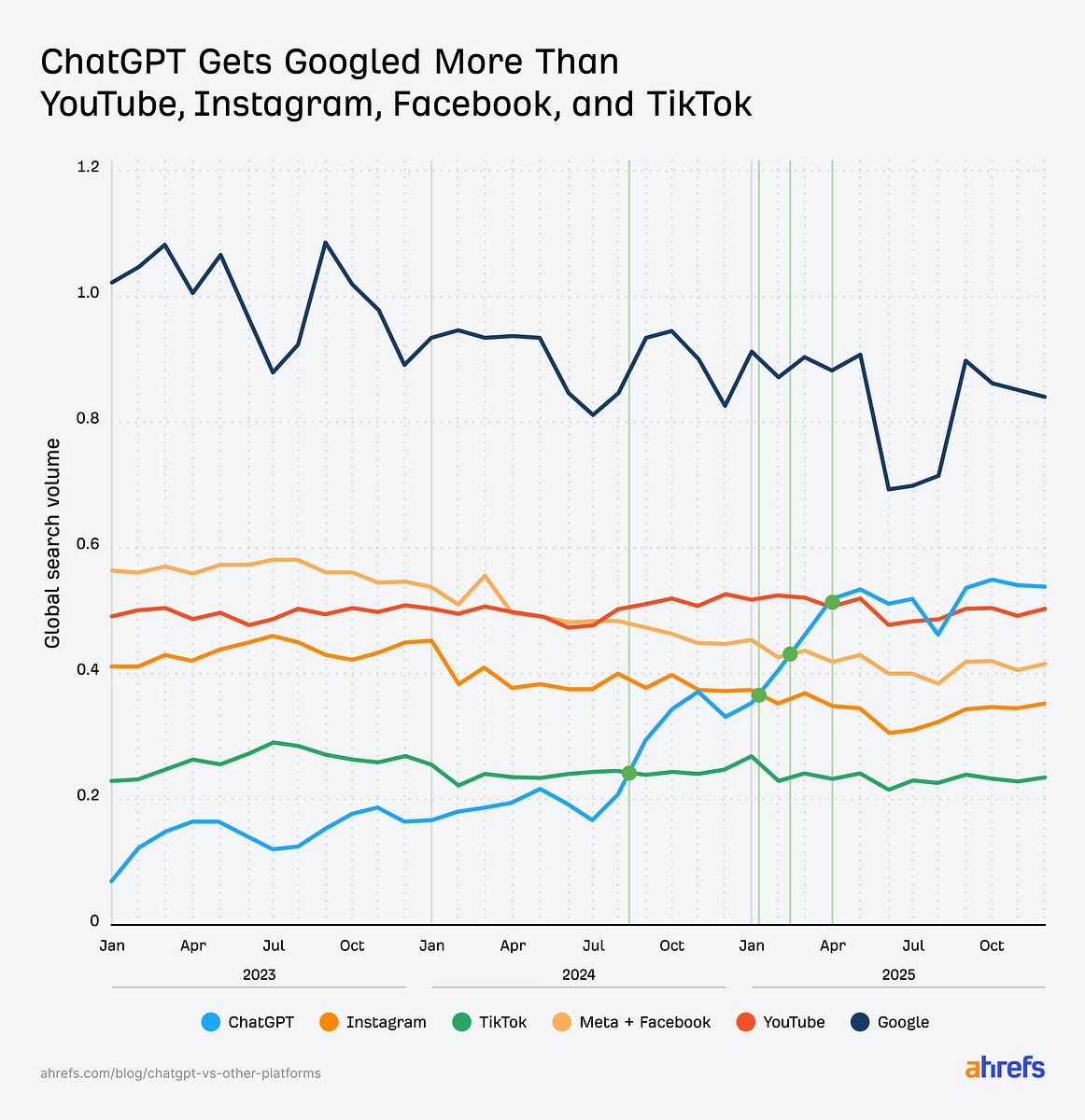
I was browsing Google Trends the other day when I discovered something strange: ChatGPT’s global search interest overtook the top platforms earlier this year, and no one noticed.
This felt impossible.
For example, YouTube has been the standard video platform on the Internet for almost two decades. It is often referred to as the second largest search engine.
So I asked Xibeijia, Ahrefs’ superstar data scientist, to pull and double-check our data.
It turns out that ChatGPT’s global search interest overtook YouTube in April 2025, just 29 months after launch.
And it’s not just YouTube. Between September 2024 and April 2025, ChatGPT surpassed TikTok, Instagram, Facebook and YouTube in monthly global search volume.
This is not a story about one platform beating another. It’s about speed. ChatGPT matched the search interest of platforms that took years (sometimes over a decade) to build their brand demand. It did it in less than two and a half years.
To measure this, we used Ahrefs’ search intelligence data to track global searches that contained each platform’s brand name or were associated with the brand entity from January 2022 to October 2025.
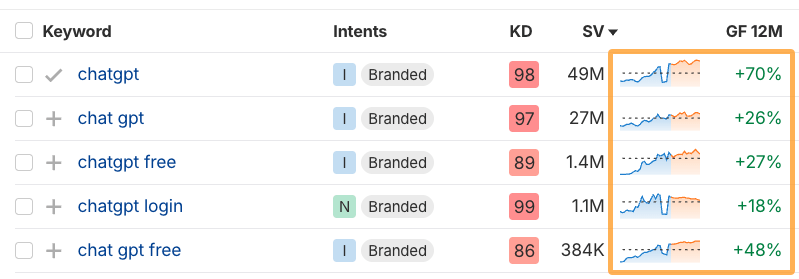
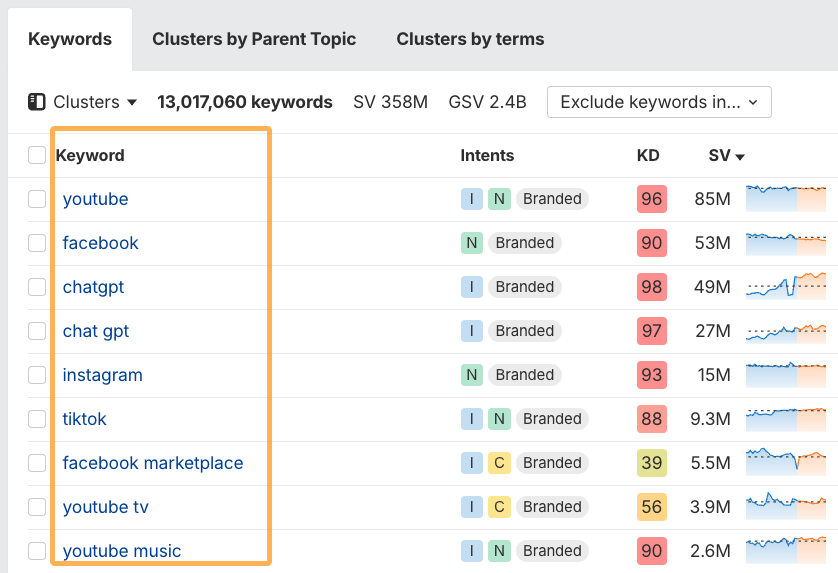
This includes searches like “ChatGPT login,” “YouTube TV,” “Facebook Marketplace,” and anything that indicates someone is actively searching for these platforms.
Side note.
For better accuracy, we combined Facebook and Meta search.
Search volume isn’t a perfect indicator of platform usage (people use apps without searching), but it does reveal intent. When millions of people consistently search for a brand month after month, that’s a routine or habit that indicates recurring interest.
In ChatGPT’s case, it doesn’t look like demand will slow down any time soon.
Google is still clearly ahead. But the gap has been narrowing since the beginning of 2023.
Google’s total search volume for all global branded searches fell from approximately 1.1 billion monthly searches in early 2022 to approximately 713 million in August 2025. ChatGPT increased from zero to approximately 460 million over the same period.
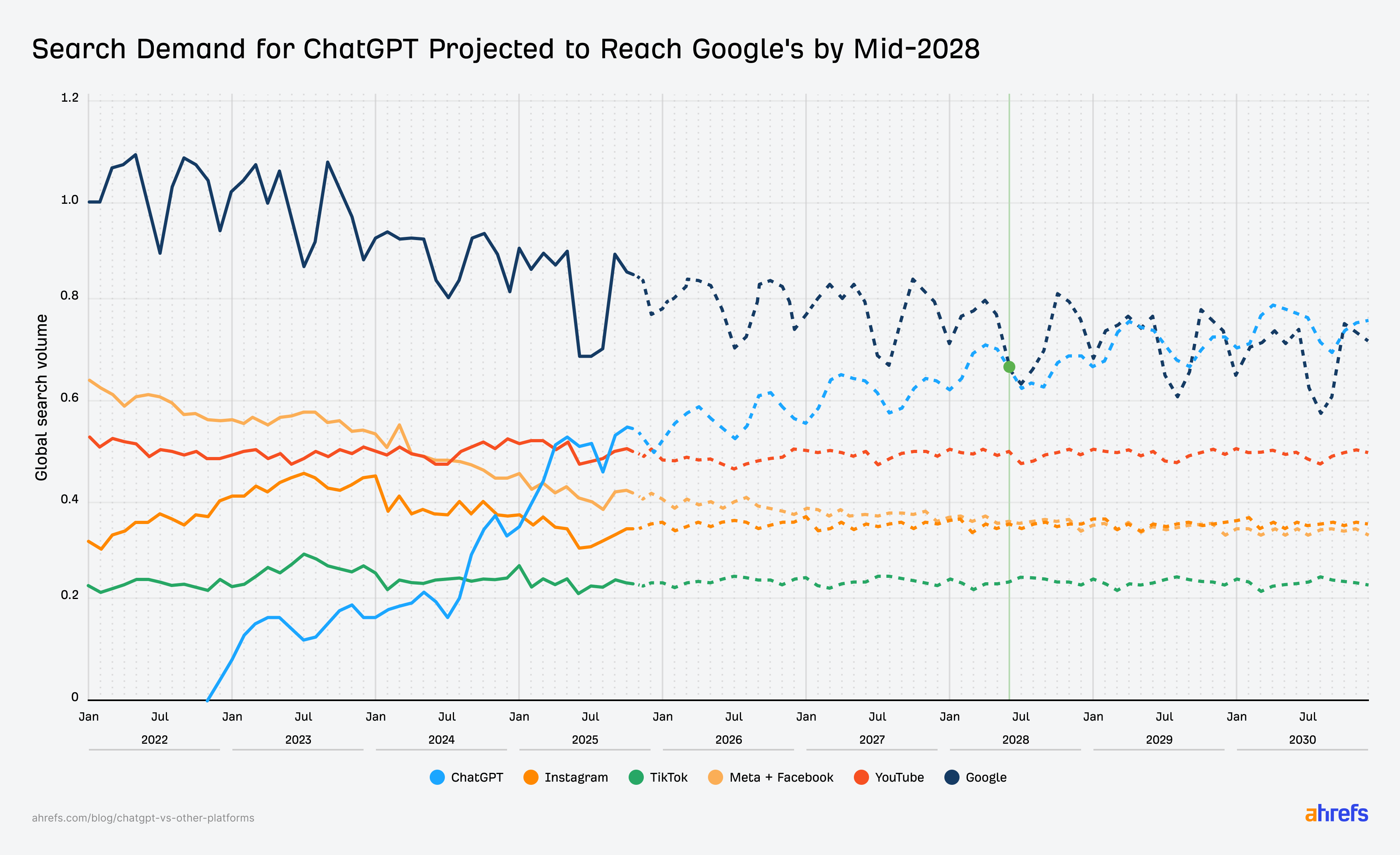
If current trends continue, ChatGPT’s search interest could match Google’s by mid-2028 and overtake it in 2029.
Standard caveat:
This forecast assumes current trends will continue without taking into account market saturation, competitive reactions, or changes in user behavior.
I keep coming back to speed. Most other major platforms (social networks, video sharing platforms, messaging apps) took years, sometimes decades, to reach this level of sustained global interest.
ChatGPT has drastically compressed this timeline.
Certainly the growth of ChatGPT is currently not surprising to anyone. Crucially, it still hasn’t plateaued.
But there’s another reason: Search interest doesn’t exist in a vacuum. It is often a leading indicator of broader market impacts.
We found that search visibility correlates with stock performance for about a third of Nasdaq companies. As search interest steadily rises or falls, a market valuation often follows. It’s not a perfect predictor, but it’s a signal that shows what people are actually paying attention to.
By this logic, ChatGPT’s development goes beyond platform adoption and focuses on where attention (and ultimately capital) goes. If search interest is any indicator, we are witnessing a fundamental remapping of the way people interact with the internet, in real time.
And if the current trend continues, we will see it overtake Google in search interest in about three years.
Follow us on Facebook | Twitter | YouTube
WPAP (907)
